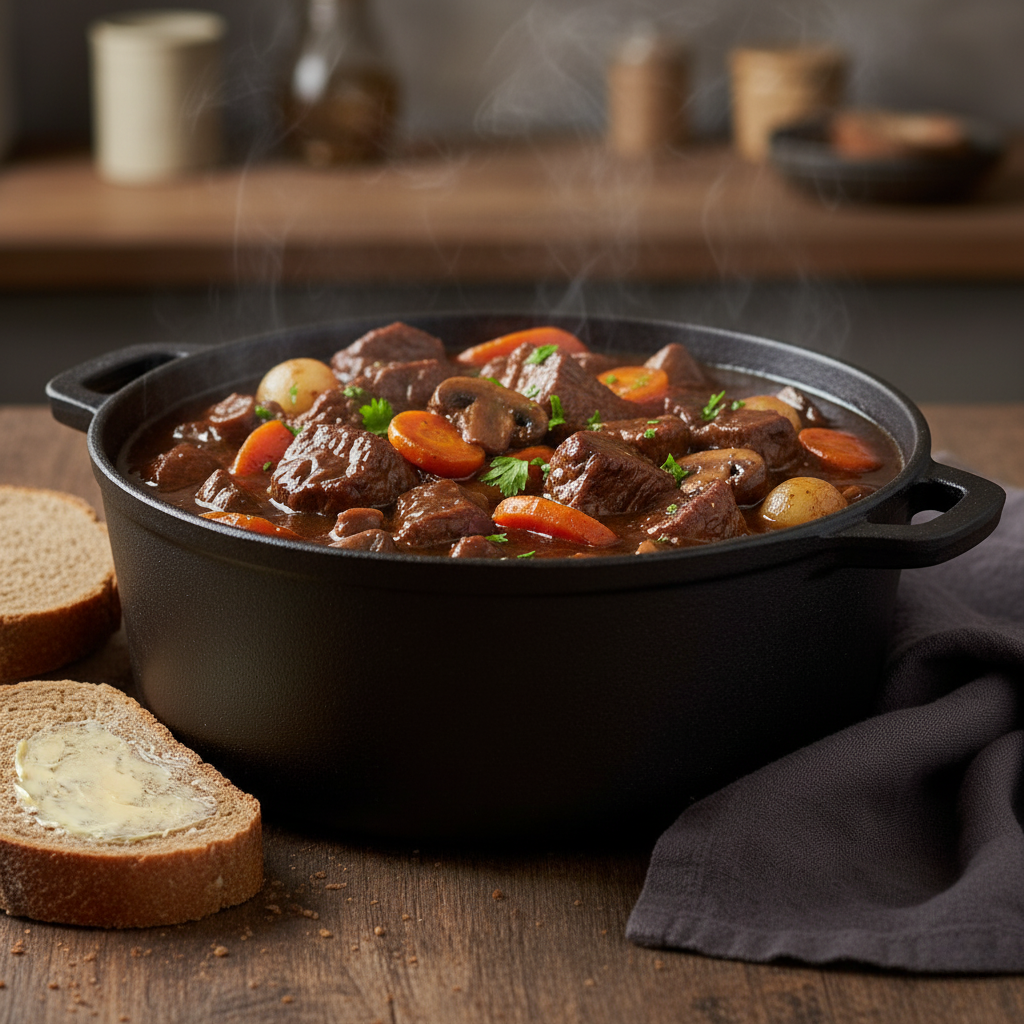
There’s something magical that happens when you combine tender Irish beef with the rich, dark depths of Guinness stout. This isn’t just any stew – it’s a dish that embodies the heart and soul of Irish cooking, where simple ingredients transform into something extraordinary through patience and love.
I’ll never forget the first time I tasted my aunt’s Beef and Guinness Stew on a cold November evening in County Cork. The fire was crackling, rain was lashing against the windows, and she ladled out steaming bowlfuls of the most incredible stew I’d ever tasted. The beef was so tender it fell apart at the touch of a spoon, and the gravy – oh, that gravy – was rich, velvety, and had a depth of flavor that I can still taste to this day.
“The secret,” she told me with a wink, “is time and Guinness. Never rush a good stew, and never skimp on the stout.” She was absolutely right. This is slow-cooked comfort at its finest, and while it takes a few hours, most of that time is hands-off. Your kitchen will fill with the most incredible aroma, and I promise you, the wait is worth every single minute.
Why Guinness Makes This Stew Extraordinary
Guinness isn’t just added for Irish authenticity – it genuinely transforms this stew. The dark stout adds a complex, slightly bitter undertone that balances the richness of the beef and the sweetness of the vegetables. As it cooks down, the alcohol evaporates, leaving behind deep, malty, almost chocolatey notes that create the most incredible gravy.
Don’t worry if you’re not a beer drinker – the finished stew doesn’t taste “beery” at all. The Guinness melds with the beef stock, tomato paste, and aromatics to create something entirely new and utterly delicious. It’s alchemy in a pot.
A Stew for Every Season (But Especially Winter)
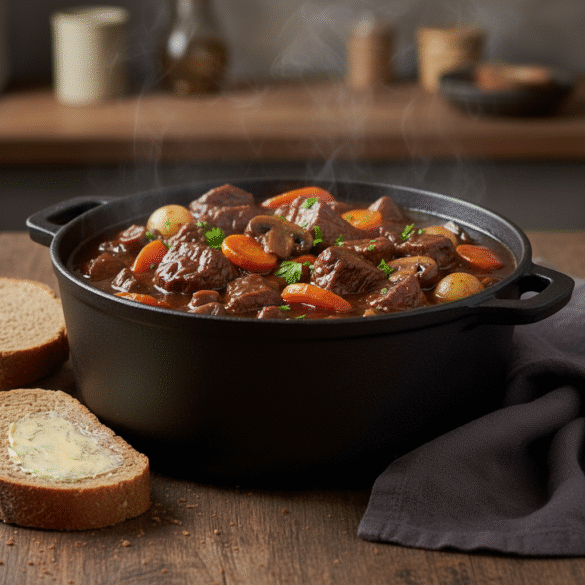
While this stew shines on cold, blustery days, the truth is it’s welcome year-round in Irish homes. It’s hearty enough for a winter evening, yet refined enough for Sunday dinner with guests. Serve it with fluffy mashed potatoes or crusty brown bread, and you’ve got a meal that will have everyone asking for seconds.
This is also one of those brilliant recipes that actually improves with time. Make it a day ahead, and the flavors deepen and meld even more beautifully. It’s perfect for entertaining because you can do all the work in advance, then simply reheat and serve.
Ingredients
- 3 lbs (1.4kg) beef chuck, cut into 2-inch chunks
- 2 tablespoons all-purpose flour
- Salt and freshly ground black pepper
- 3 tablespoons vegetable oil or beef dripping
- 4 thick slices bacon (Irish bacon or streaky bacon), chopped
- 2 large onions, roughly chopped
- 3 large carrots, peeled and cut into thick rounds
- 3 celery stalks, roughly chopped
- 4 cloves garlic, minced
- 2 tablespoons tomato paste
- 1 bottle (440ml) Guinness stout
- 2 cups (480ml) beef stock
- 2 bay leaves
- 3 sprigs fresh thyme (or 1 teaspoon dried thyme)
- 1 tablespoon dark brown sugar
- 1 tablespoon Worcestershire sauce
- 1 lb (450g) baby potatoes, halved (or regular potatoes cut into chunks)
- 2 tablespoons butter
- 2 tablespoons all-purpose flour (for thickening, optional)
- Fresh parsley, chopped, for garnish
Instructions
Step 1: Prepare the Beef (10 minutes)
Pat the beef chunks completely dry with paper towels – this is crucial for good browning. Season the beef generously all over with salt and pepper, then lightly dust with 2 tablespoons of flour, tossing to coat evenly. Don't skip this step – the flour helps create that beautiful brown crust and will thicken your gravy later.
Step 2: Brown the Beef (15 minutes)
Heat 2 tablespoons of oil in your Dutch oven over medium-high heat until it's shimmering. Working in batches (don't overcrowd the pot!), brown the beef chunks on all sides until they're deeply caramelized – about 3-4 minutes per side. You want a rich, dark crust forming on the meat. This step is where so much flavour develops, so don't rush it.
Transfer each batch of browned beef to a plate and set aside. Add more oil between batches if needed.
Pro Tip: The brown bits (called fond) that stick to the bottom of the pot are pure flavour gold. We'll be using those!
Step 3: Cook the Bacon and Aromatics (8 minutes)
Reduce the heat to medium and add the chopped bacon to the pot. Cook, stirring occasionally, until the bacon is crispy and has rendered its fat, about 5 minutes.
Add the chopped onions, carrots, and celery. Cook, stirring frequently and scraping up all those beautiful brown bits from the bottom of the pot, until the vegetables start to soften and the onions become translucent, about 5 minutes.
Add the minced garlic and tomato paste. Stir constantly for about 1 minute until the garlic is fragrant and the tomato paste has darkened slightly.
Step 4: Deglaze with Guinness (5 minutes)
Now for the fun part – pour in the entire bottle of Guinness. It will bubble and steam dramatically. Use your wooden spoon to scrape up every last bit of the browned fond from the bottom and sides of the pot. This is where magic happens – all that caramelized flavor is dissolving into your stew base.
Let the Guinness simmer vigorously for about 3-4 minutes to cook off the raw alcohol and reduce slightly. The kitchen will smell absolutely incredible at this point.
Step 5: Build the Stew (5 minutes)
Return the browned beef (and any accumulated juices) back to the pot. Pour in the beef stock and add the bay leaves, thyme sprigs, brown sugar, and Worcestershire sauce. Stir everything together and bring to a gentle simmer.
The liquid should just about cover the meat. If it doesn't, add a splash more stock or water. Give it a good stir, taste the liquid, and adjust the seasoning if needed (remember, it will reduce and concentrate, so don't over-salt now).
Step 6: Slow Cook to Perfection (2-2.5 hours)
Once the stew comes to a simmer, reduce the heat to low, cover the pot with the lid slightly ajar (this allows some steam to escape and helps the liquid reduce), and let it cook gently for 2 to 2.5 hours.
You want a bare simmer – just a few gentle bubbles breaking the surface every few seconds. Check it occasionally and give it a stir. The beef is ready when it's so tender you can break it apart with a spoon.
Alternative Methods:
- Oven Method: After bringing to a simmer, transfer the covered pot to a 325°F (160°C) oven for 2.5-3 hours.
- Slow Cooker: After browning the beef and sautéing the vegetables, transfer everything to a slow cooker and cook on low for 6-8 hours or high for 4-5 hours.
- Instant Pot: Use the sauté function for browning, then pressure cook on high for 45 minutes with natural release.
Step 7: Add the Potatoes (45 minutes before serving)
About 45 minutes before you want to serve, add the halved baby potatoes to the stew. They'll cook in the rich gravy and absorb all those incredible flavours. Continue simmering until the potatoes are tender when pierced with a fork.
Step 8: Thicken the Gravy (Optional, 10 minutes)
If you prefer a thicker gravy (I always do!), here's a fool proof method: In a small bowl, mix 2 tablespoons of softened butter with 2 tablespoons of flour to create a paste (called a beurre manié).
Remove the bay leaves and thyme sprigs from the stew. Whisk small pieces of the butter-flour paste into the simmering stew, stirring constantly. Let it simmer for 5-10 minutes until the gravy has thickened to your liking.
Step 9: Final Touches and Serve
Taste and adjust the seasoning – you'll likely want to add more salt and pepper at this stage. The stew should be rich, deeply flavoured, and glossy.
Ladle the stew into deep bowls, making sure everyone gets plenty of beef, vegetables, and that glorious gravy. Garnish with a generous sprinkle of fresh chopped parsley for colour and freshness.
Pro Tips for the Best Beef and Guinness Stew
Choose the Right Cut: Chuck roast (also called braising steak) is ideal because it has enough fat and connective tissue to stay moist during long cooking. Avoid lean cuts – they’ll dry out.
Brown in Batches: Overcrowding the pot steams the meat instead of browning it. Leave space between pieces for that essential caramelization.
Don’t Rush the Simmering: Low and slow is the mantra. If it’s cooking too fast, you’ll end up with tough meat. Patience is everything.
Which Guinness to Use: Regular Guinness Draught is perfect. Save the fancy stouts for drinking – they won’t make a noticeable difference in the stew.
Make It Ahead: This stew is even better the next day. Cool completely, refrigerate, then reheat gently. The flavors will have melded beautifully.
Skim the Fat: If making ahead, the fat will solidify on top when chilled. Simply lift it off before reheating for a less greasy stew.
Adjust Consistency: Too thin? Simmer uncovered to reduce. Too thick? Add a splash of stock or water.
Variations to Try
Lamb and Guinness Stew: Replace beef with lamb shoulder for a more traditional Irish stew with a Guinness twist.
Root Vegetable Addition: Add parsnips, turnips, or rutabaga along with the carrots for more traditional Irish flavors.
Mushroom Boost: Add 8oz of quartered button or cremini mushrooms when you add the potatoes.
Pearl Barley Addition: Add ½ cup of pearl barley at the start of cooking for a heartier, more rustic stew.
Dumpling Topping: Top with Irish soda bread dumplings for the last 30 minutes of cooking.
Herb Variations: Try adding a sprig of rosemary or a few sage leaves along with the thyme.
Storage and Reheating
Refrigerator: Store in an airtight container for up to 4 days. The stew often tastes even better on day two or three as the flavors continue to develop.
Freezer: This stew freezes beautifully for up to 3 months. Cool completely, then portion into freezer-safe containers. Leave about an inch of space at the top for expansion.
Reheating: Thaw overnight in the refrigerator if frozen. Reheat gently in a pot over medium-low heat, stirring occasionally and adding a splash of stock or water if needed. You can also reheat individual portions in the microwave.
From Frozen: You can reheat directly from frozen – just use low heat and stir frequently, adding liquid as needed.
Why This Recipe Works
The combination of Guinness and beef stock creates incredible depth of flavor that you simply can’t achieve with stock alone. The long, slow cooking time breaks down the tough connective tissue in the beef chuck, transforming it into melt-in-your-mouth tender pieces.
The vegetables add sweetness and texture, while the bacon brings a smoky, savory note. The tomato paste provides umami richness, and the brown sugar balances any bitterness from the stout. Everything works together in perfect harmony.
But here’s what really makes this stew special: it’s forgiving. You can’t really mess it up. Too much liquid? Simmer it down. Not enough? Add more stock. Forgot to add something? Toss it in. This is rustic, home-style cooking at its finest.
Pairing Suggestions
Beer: A pint of Guinness, naturally! The stew and the stout complement each other perfectly.
Wine: If you prefer wine, try a full-bodied red like Cabernet Sauvignon or Malbec.
Non-Alcoholic: Strong black tea or a rich beef consommé work surprisingly well.
The Perfect Make-Ahead Meal
This is one of my favorite dishes for entertaining because you can make it entirely ahead of time. In fact, I recommend it – the flavors improve dramatically after a day in the refrigerator.
Make the stew two days before you need it. Let it cool completely, then refrigerate. The day you plan to serve it, simply remove any solidified fat from the surface, reheat gently, and adjust the seasoning if needed. Your guests will think you’ve been slaving away all day, when really you’ve just been reheating!