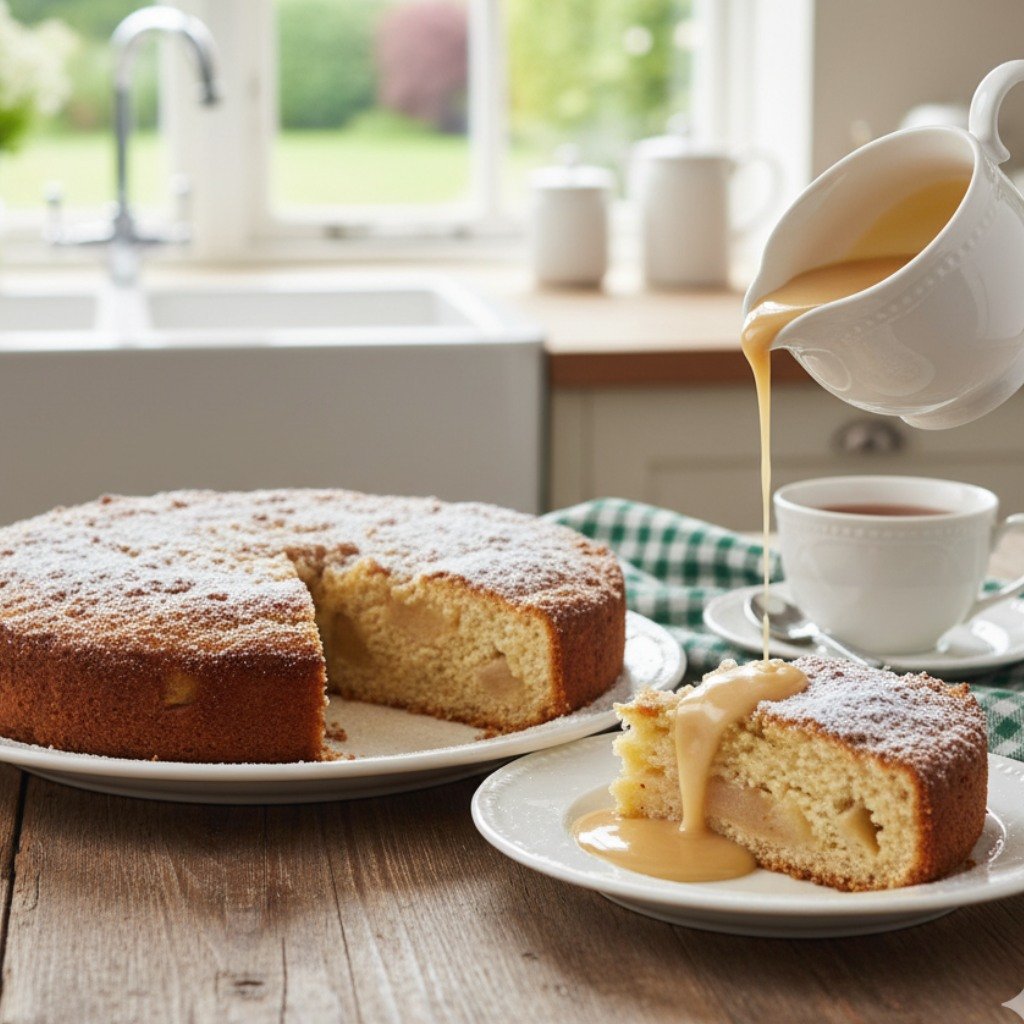
There’s something wonderfully comforting about the aroma of apples and cinnamon wafting through an Irish kitchen on a crisp autumn afternoon. This Traditional Irish Apple Cake has been gracing tables across Ireland for generations, and I can still remember my grandmother’s version cooling on the windowsill of her County Cork farmhouse. Unlike the more refined French tarts or American pies, Irish apple cake is beautifully rustic – the sort of dessert that doesn’t put on airs but delivers pure, honest flavour in every single bite.
What makes this cake so special is its unpretentious nature. It’s not trying to impress with fancy techniques or exotic ingredients. Instead, it celebrates the simple pleasure of good Irish cooking apples – perhaps Bramleys from the garden – nestled in a tender, buttery sponge that’s just sweet enough to complement the fruit’s natural tartness. The demerara sugar on top creates a lovely golden crust that gives way to the most heavenly texture beneath.
In Ireland, apple cake isn’t just a dessert – it’s part of our culinary heritage. Every family seems to have their own version, passed down through mothers and grandmothers, each with their own little secrets. Some add a splash of Irish whiskey, others swear by buttermilk, and there are those who insist on a crumble topping. But at its heart, Irish apple cake remains wonderfully consistent: a celebration of our abundant apple harvests and our love of simple, satisfying baking.
What Makes This Recipe Special
This particular recipe strikes the perfect balance between cake and fruit. Rather than the apples being a mere addition, they’re the star of the show, making up nearly half the volume of the finished cake. The key is using proper cooking apples – varieties like Bramley or Granny Smith that hold their shape during baking whilst releasing just enough moisture to keep the sponge beautifully tender.
The spicing is deliberately gentle – just enough cinnamon and nutmeg to enhance the apple flavour without overwhelming it. The texture is what really sets this apart: dense enough to hold those generous chunks of apple, yet light enough that you’ll find yourself reaching for a second slice (and possibly a third). The demerara sugar topping isn’t just for show – it creates a delightful contrast in both flavour and texture that makes each bite interesting.
Ingredients
- 225g plain flour
- 1 teaspoon baking powder
- 1/2 teaspoon salt
- 1/2 teaspoon ground cinnamon
- 1/4 teaspoon ground nutmeg
- 115g unsalted butter, softened
- 150g caster sugar
- 2 large eggs
- 120ml whole milk
- 1 teaspoon vanilla extract
- 450g cooking apples, peeled and diced
- 2 tablespoons demerara sugar
- 1/2 teaspoon ground cinnamon (for topping)
- 25g butter, melted (for topping)
Instructions
Step 1: Prepare Your Oven and Tin
Preheat your oven to 180°C (350°F/Gas Mark 4). Grease a 23cm springform cake tin with butter and dust lightly with flour, tapping out any excess.
Step 2: Mix the Dry Ingredients
In a medium bowl, whisk together the plain flour, baking powder, salt, cinnamon, and nutmeg until well combined. Set aside.
Step 3: Cream Butter and Sugar
In a large mixing bowl, cream the softened butter and caster sugar together using an electric mixer until light and fluffy, about 3-4 minutes. The mixture should be pale and increased in volume.
Step 4: Add Eggs and Vanilla
Beat in the eggs one at a time, ensuring each is fully incorporated before adding the next. Mix in the vanilla extract until combined.
Step 5: Combine Wet and Dry Ingredients
Alternately add the flour mixture and milk to the butter mixture, beginning and ending with the flour. Mix until just combined - don't overmix as this will make the cake tough.
Step 6: Fold in the Apples
Gently fold the diced apples into the batter using a wooden spoon or spatula. The batter will be quite thick and studded with apple pieces.
Step 7: Transfer to Tin
Spoon the batter into your prepared cake tin, spreading it evenly with the back of a spoon. The surface doesn't need to be perfectly smooth.
Step 8: Add the Topping
Brush the top of the cake with the melted butter, then sprinkle evenly with demerara sugar and the additional cinnamon.
Step 9: Bake the Cake
Bake for 40-45 minutes, or until the top is golden brown and a skewer inserted into the centre comes out with just a few moist crumbs attached.
Step 10: Cool and Serve
Allow the cake to cool in the tin for 10 minutes before carefully removing. Serve warm or at room temperature with a dollop of fresh cream or custard.
Pro Tips for Perfect Results
Choose Your Apples Wisely: Cooking apples are essential here. Bramley apples are the gold standard in Ireland, but if you can’t find them, Granny Smith or any tart, firm cooking apple will work beautifully. Avoid eating apples as they’ll turn to mush during baking.
Don’t Overmix: Once you start adding the flour, mix just until combined. Overmixing develops the gluten in the flour, resulting in a tough, chewy cake rather than the tender crumb we’re after.
Room Temperature Ingredients: Ensure your butter and eggs are at room temperature before you begin. This helps create a smooth, well-emulsified batter that bakes evenly.
Test for Doneness: The cake is ready when the top is golden brown and springs back lightly when touched. A skewer should come out with just a few moist crumbs – completely clean means it’s overbaked.
Size Your Apples Consistently: Dice your apples into roughly 1cm pieces. This ensures even cooking and prevents large chunks from creating air pockets in the finished cake.
Common Mistakes to Avoid
One of the most frequent errors is using the wrong type of apples. Dessert apples simply don’t have the structure to hold up during baking and will create a soggy, unpleasant texture. Similarly, many bakers make the mistake of peeling their apples too far in advance, leading to browning and loss of flavour.
Another common pitfall is overbaking. Because this cake contains so much fruit, it stays moist longer than a standard sponge, and the natural sugars in the apples can make the top brown quite quickly. Keep an eye on it during the final 10 minutes of baking.
Finally, resist the urge to add too much liquid if the batter seems thick. The apples will release moisture during baking, so a thick batter is exactly what we want for the proper texture.
Variations to Try
Irish Whiskey Apple Cake: Replace 2 tablespoons of the milk with good Irish whiskey for a more grown-up version that’s perfect for special occasions.
Blackberry Apple Cake: Add 100g of fresh blackberries along with the apples for a lovely autumnal variation that’s very popular in rural Ireland.
Crumble Top Version: Instead of the demerara topping, try a simple crumble made from 50g each of butter, flour, and brown sugar, rubbed together until it resembles breadcrumbs.
Wholemeal Version: Substitute half the plain flour with wholemeal flour for a nuttier flavour and heartier texture that pairs beautifully with the apples.
Spiced Version: Add a pinch of ground ginger and allspice to the batter for a more complex spice profile that’s particularly lovely during the colder months.
Serving Suggestions
Irish Apple Cake is absolutely divine served warm with a generous dollop of freshly whipped cream or a scoop of good vanilla ice cream. In Ireland, it’s traditional to serve it with a proper cup of tea – the robust flavour of a good Irish Breakfast tea complements the cake perfectly.
For a more indulgent treat, try serving it with warm custard or even a drizzle of butterscotch sauce. Some families in the west of Ireland serve it with a slice of sharp cheddar cheese – the combination might sound unusual, but the salty, tangy cheese provides a lovely contrast to the sweet, spiced cake.
It’s equally wonderful as an afternoon tea treat or as a proper pudding after Sunday lunch. The cake improves with age too, becoming even more moist and flavourful on the second day.
Storage and Reheating
Store your Irish Apple Cake covered at room temperature for up to three days, or in the refrigerator for up to a week. The high moisture content from the apples means it keeps exceptionally well.
For longer storage, wrap individual portions in clingfilm and freeze for up to three months. Thaw at room temperature for a few hours before serving.
To reheat, pop slices in a warm oven (150°C/300°F/Gas Mark 2) for 5-10 minutes, or give them a quick 20-30 seconds in the microwave. The cake is lovely served warm, as the heat brings out all those wonderful apple and spice aromas.
Cultural Significance
Apple cake holds a special place in Irish culinary tradition, particularly in rural communities where apple orchards were common features of the landscape. Before modern transportation made exotic fruits readily available, apples were one of the few fruits that could be stored through the winter months, making them incredibly valuable.
Traditional Irish apple cake was often made for special occasions – harvest festivals, Sunday dinners, and community gatherings. It represented the best of Irish hospitality: generous, unpretentious, and made with love. The cake also played a role in courtship traditions, with young women often judged on their baking skills, and a good apple cake was considered a mark of a skilled homemaker.
In many Irish families, apple cake recipes were closely guarded secrets, passed down through generations of women who took great pride in their particular method or special ingredient. Even today, you’ll find heated discussions in Irish kitchens about whether the apples should be diced or sliced, whether to include raisins, or the proper amount of spice.
The beauty of this humble cake lies not just in its flavour, but in its ability to bring people together. It’s the sort of dessert that encourages lingering at the table, sharing stories over second cups of tea, and creating the warm, welcoming atmosphere that Irish kitchens are famous for. Every bite connects us to countless generations of Irish bakers who understood that the best recipes aren’t just about ingredients and technique – they’re about love, tradition, and the joy of feeding the people we care about.
So go ahead, bake this gorgeous cake, and don’t forget to share photos of your creation with us! We absolutely love seeing how our recipes turn out in kitchens around the world. Subscribe to our newsletter for more authentic Irish recipes that’ll bring a taste of the Emerald Isle to your table. Slán go fóill!