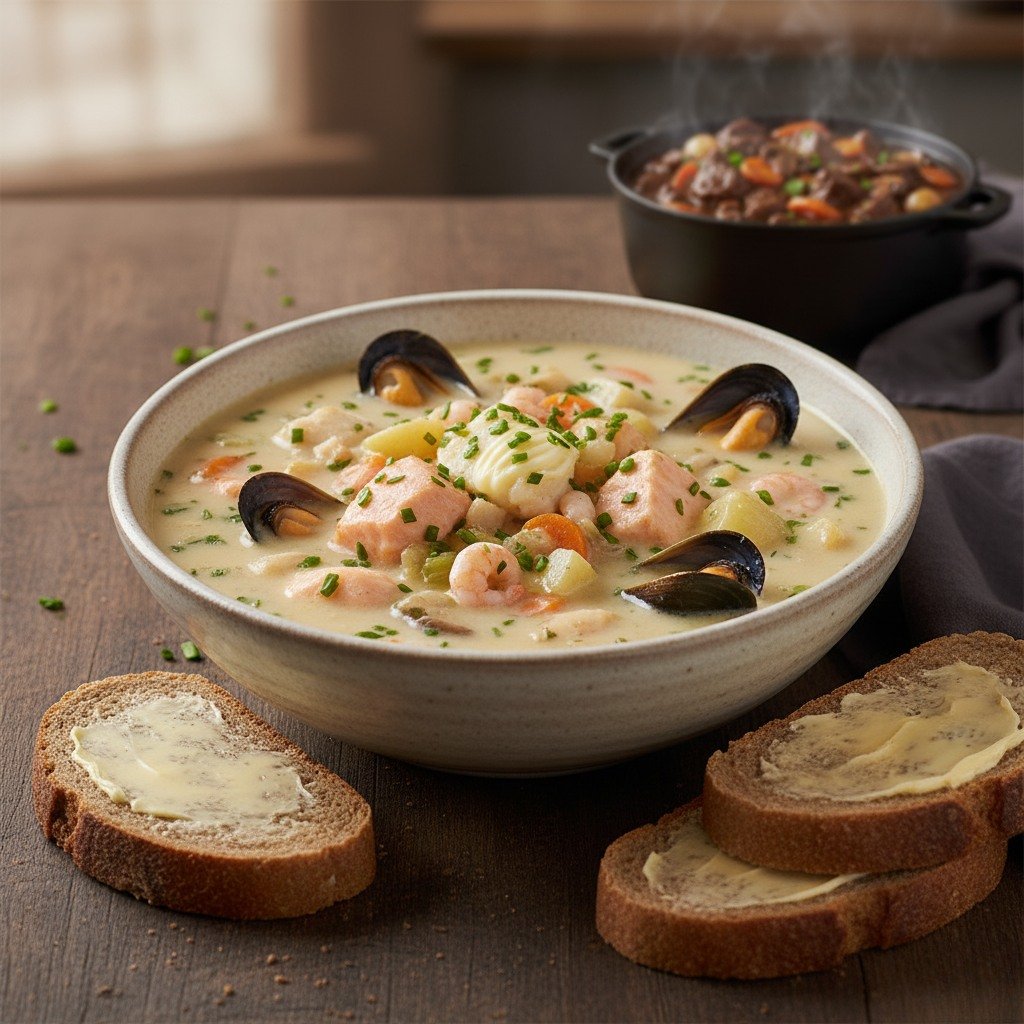
There’s something magical about standing on the rugged cliffs of the Irish coast, watching fishing boats return with their daily catch as the Atlantic waves crash against the rocks below. Growing up in County Cork, I spent countless summer holidays with my grandmother, who had a way of transforming the day’s fresh seafood into the most soul-warming chowder you could imagine. Her kitchen always smelled of sea salt and fresh herbs, and the sound of her wooden spoon stirring that creamy, golden broth is a memory I treasure to this day.
This traditional Irish seafood chowder recipe has been passed down through generations of coastal families, each adding their own special touch while maintaining the authentic flavors that make it distinctly Irish. It’s more than just a soup – it’s a celebration of Ireland’s incredible maritime bounty and the resourcefulness of our ancestors who knew how to make the most of every catch.
The Heart of Irish Coastal Cooking
Irish seafood chowder represents the very essence of our coastal cuisine. Unlike its American counterparts, traditional Irish chowder focuses on simplicity and quality, allowing the natural flavors of the sea to shine through without overwhelming spices or complicated techniques. The secret lies in using the freshest possible seafood, good Irish butter, and taking the time to build flavors layer by layer.
What makes this Irish seafood chowder truly special is its versatility and the way it brings communities together. In fishing villages across Ireland, from Dingle to Howth, you’ll find variations of this recipe in every pub and home kitchen. Some families swear by adding a splash of Irish whiskey, others include chunks of Irish bacon for extra richness, but the foundation remains the same – fresh seafood, creamy broth, and love.
The beauty of this recipe lies in its adaptability to whatever the sea provides. Whether you’re using cod caught off the coast of Donegal, mussels from Bantry Bay, or prawns from Dublin Bay, the technique remains constant while the flavors reflect the unique character of each catch.
Building the Perfect Irish Seafood Chowder
The key to an exceptional Irish seafood chowder starts with your base vegetables – what we call the holy trinity of Irish cooking: onions, celery, and carrots. These humble ingredients, when properly sweated in good Irish butter, create a foundation of flavor that can’t be rushed. My grandmother always said, “Patience in the pot leads to perfection in the bowl,” and she was absolutely right.
The choice of potatoes is crucial too. I prefer using floury potatoes like Roosters or Kerr’s Pinks, which break down slightly during cooking, naturally thickening the chowder while maintaining some texture. This is what gives authentic Irish seafood chowder its characteristic body without relying heavily on flour or cream alone.
When it comes to the seafood selection, variety is key. The combination of firm white fish, delicate smoked salmon, briny mussels, and sweet prawns creates layers of flavor and texture that make each spoonful interesting. Don’t be tempted to add all the seafood at once – timing is everything when you want each element cooked to perfection.
Pro Tips for Chowder Success
Temperature Control is Everything
Keep your heat low once you’ve added the dairy. High heat will cause the cream to curdle, ruining the silky texture that makes this chowder so luxurious. If you notice any signs of curdling, immediately remove from heat and whisk vigorously, or add a splash of cold milk to bring down the temperature.
Fresh vs. Frozen Seafood
While fresh is always preferred, high-quality frozen seafood works beautifully in this recipe. If using frozen prawns or fish, ensure they’re completely thawed and patted dry before adding to prevent excess water from diluting your carefully crafted broth.
The Importance of Fish Stock
Never underestimate the power of good fish stock. If you can’t find quality fish stock, make your own by simmering fish bones, onion, celery, and herbs for 30 minutes. The depth of flavour it adds to your Irish seafood chowder is incomparable to using chicken or vegetable stock.
Ingredients
- 2 tablespoons Irish butter
- 1 large onion, finely diced
- 2 celery stalks, diced
- 2 medium carrots, diced
- 3 medium potatoes, peeled and cubed
- 3 tablespoons plain flour
- 4 cups (1 litre) fish stock
- 1 cup (240ml) whole milk
- 1 cup (240ml) heavy cream
- 1 bay leaf
- 1 teaspoon fresh thyme leaves
- 1 lb (450g) white fish fillets (cod or haddock), cut into chunks
- 8 oz (225g) smoked salmon, flaked
- 12 fresh mussels, cleaned and debearded
- 8 oz (225g) raw prawns, peeled
- 2 tablespoons fresh parsley, chopped
- Salt and white pepper to taste
- 1 tablespoon lemon juice
Instructions
Step 1: Prepare the Base
In a large, heavy-bottomed pot, melt the Irish butter over medium heat. Add the diced onion, celery, and carrots, cooking gently for 5-7 minutes until the vegetables begin to soften but not brown. The key is to sweat the vegetables, releasing their natural sweetness that forms the foundation of our chowder.
Step 2: Add Potatoes and Create the Roux
Add the cubed potatoes to the pot and stir to combine with the softened vegetables. Sprinkle the flour over the mixture and stir continuously for 2-3 minutes, creating a light roux that will thicken our chowder beautifully. This step is crucial for preventing lumps later on.
Step 3: Build the Broth
Gradually pour in the fish stock, stirring constantly to prevent lumps from forming. Add the bay leaf and fresh thyme, then bring the mixture to a gentle boil. Reduce heat to medium-low and simmer for 10-12 minutes until the potatoes are tender when pierced with a fork.
Step 4: Add Dairy and Seafood
Reduce heat to low and slowly stir in the milk and cream. Add the white fish chunks first, as they need the longest cooking time. Simmer gently for 3-4 minutes, then add the mussels and cook for another 2-3 minutes until they begin to open. Finally, add the prawns and cook for 2 minutes until pink and cooked through.
Step 5: Final Touches
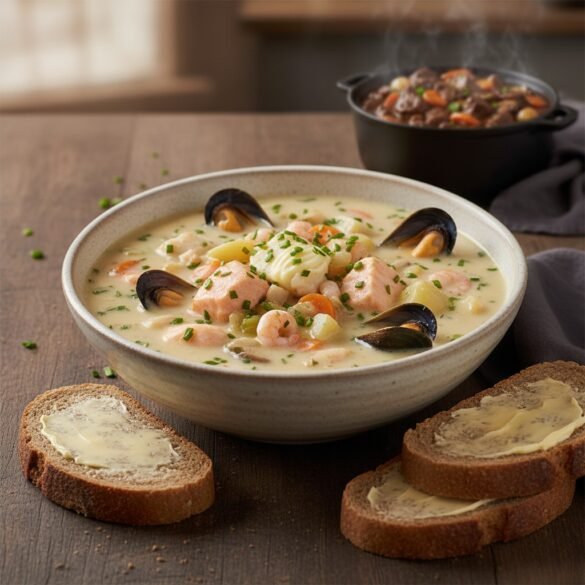
Gently fold in the flaked smoked salmon and fresh parsley. Season with salt, white pepper, and lemon juice to taste. Remove the bay leaf and serve immediately while piping hot, accompanied by crusty Irish brown bread.
Seasoning Secrets
White pepper is traditional in Irish seafood chowder because it provides heat without the black specks that would mar the creamy appearance. Season gradually and taste frequently – the saltiness of your seafood and stock will affect how much additional salt you need.
Regional Variations to Try
West Cork Style
Add 2 tablespoons of Irish whiskey in the final step for a warming kick that complements the seafood beautifully. The alcohol cooks off, leaving behind a subtle complexity that elevates the entire dish.
Dublin Bay Special
Include chunks of Irish bacon or pancetta, cooked until crispy and added with the vegetables. This creates a surf-and-turf element that’s particularly satisfying on cold winter days.
Galway Bay Version
Incorporate fresh scallops and a handful of samphire (sea beans) if you can find them. The scallops add sweetness, while samphire provides a delightful salty crunch reminiscent of the seashore.
Ulster Variation
Some Northern Irish cooks add a tablespoon of tomato paste for colour and subtle acidity that balances the richness of the cream. It’s not traditional everywhere, but it creates a beautiful golden hue.
Perfect Pairings and Serving Suggestions
No bowl of Irish seafood chowder is complete without proper accompaniments. Fresh Irish brown bread, still warm from the oven, is the classic choice. The nutty, dense texture provides the perfect contrast to the creamy soup, and it’s ideal for soaking up every last drop.
For a more elegant presentation, consider serving with Irish wheaten bread or even homemade soda bread rolls. A simple side salad of watercress and cucumber dressed with lemon vinaigrette provides a fresh, peppery contrast that cleanses the palate between spoonfuls.
Beverage-wise, a crisp Irish white wine like a Riesling from one of our emerging vineyards pairs beautifully, or stick with tradition and serve alongside a perfectly poured pint of Guinness. The creamy head and slightly bitter finish complement the rich chowder wonderfully.
Storage and Reheating Wisdom
Irish seafood chowder is best enjoyed fresh, but leftovers can be stored in the refrigerator for up to two days. When reheating, use the gentlest heat possible and add a splash of milk or cream if the chowder has thickened too much. Never bring leftover chowder to a rolling boil, as this will overcook the seafood and potentially curdle the dairy.
For make-ahead preparation, you can prepare the base (everything up to adding the seafood) and refrigerate for up to two days. When ready to serve, gently reheat the base and add your fresh seafood, cooking just until done. This ensures the seafood maintains its perfect texture while still allowing you to get ahead on preparation.
The Science Behind the Perfect Chowder
Understanding why this Irish seafood chowder works so well helps you master the technique. The flour roux not only thickens the soup but also prevents the dairy from curdling by providing structure and stability. The gradual addition of liquid prevents lumps, while the low simmering temperature preserves the delicate seafood textures.
The combination of milk and cream provides the perfect balance – milk adds liquid volume and mild dairy flavor without excessive richness, while cream contributes the luxurious mouthfeel that makes this chowder so satisfying. The touch of lemon juice at the end brightens all the flavors and adds just enough acidity to balance the richness.
This traditional Irish seafood chowder represents everything I love about Irish coastal cooking – it’s honest, flavorful, and deeply satisfying. It connects us to our maritime heritage while providing comfort and nourishment that warms both body and soul. Whether you’re cooking for family dinner or entertaining guests, this chowder never fails to impress and create lasting memories around the table.
Give this recipe a try, and don’t forget to serve it with pride, knowing you’re carrying on a tradition that has nourished Irish families for generations. Sláinte to good food, good company, and the bounty of our beautiful Irish seas!