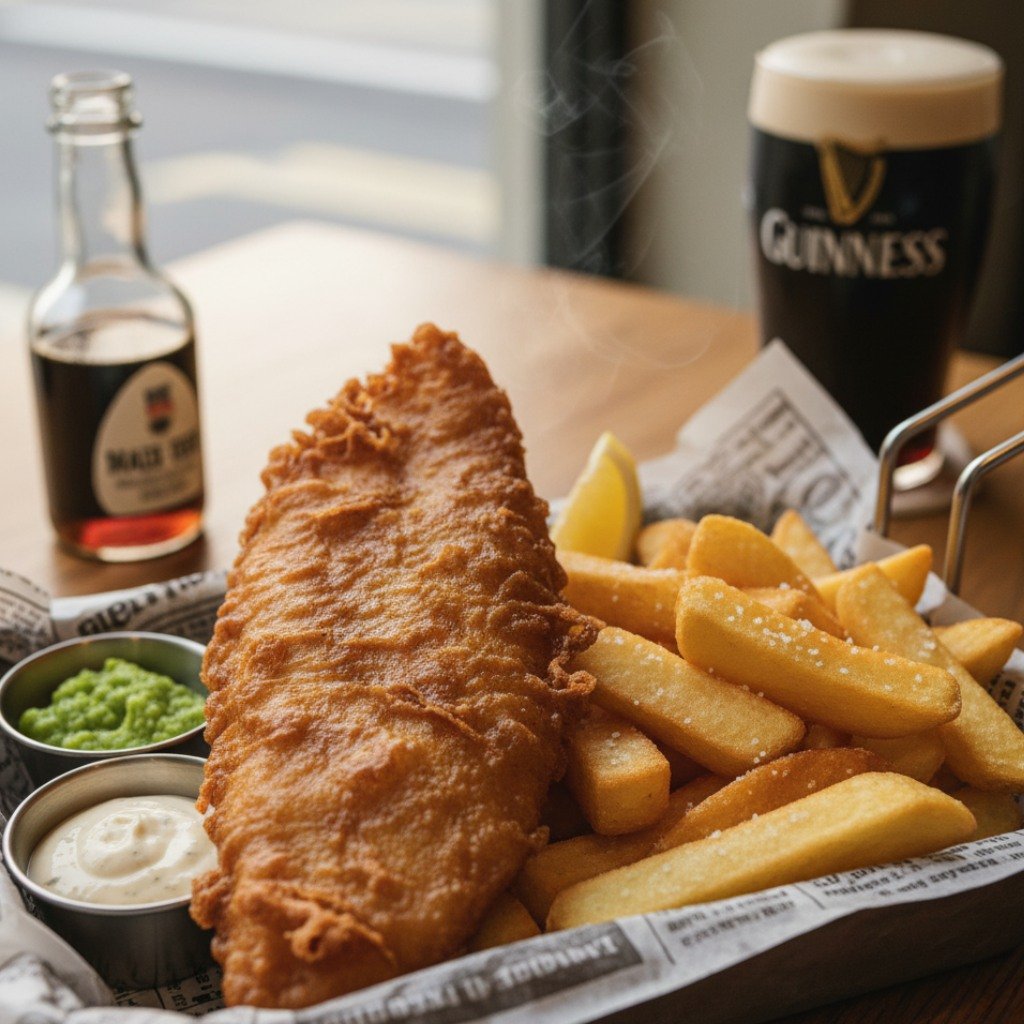
There’s something universally satisfying about perfectly cooked fish and chips – crispy golden batter giving way to flaky white fish, served alongside hot, fluffy chips. While the dish may have British origins, the Irish have made it their own, and today I’m sharing the secrets to making authentic chipper-style fish and chips at home.
Walking along any Irish seaside town, you’ll find the irresistible aroma of fish and chips wafting from the local chipper. It’s Friday night comfort food, a post-pub tradition, and a family favorite that never goes out of style. From Dublin to Dingle, from Galway to Cork, fish and chips holds a special place in Irish hearts.
The beauty of great fish and chips lies in simplicity – fresh fish, a light crispy batter, and perfectly cooked chips. No fancy ingredients, no complicated techniques. Just honest, delicious food done right. And while it might seem intimidating to deep-fry at home, I promise it’s easier than you think.
What Makes Irish Fish and Chips Special?
Irish fish and chips typically uses fresh cod or haddock, caught in the cold Atlantic waters. The batter is light and crispy, never heavy or greasy. The chips (that’s thick-cut fries for my American friends) are fluffy inside with a golden crispy exterior.
Traditionally served wrapped in paper with salt and vinegar, it’s the ultimate comfort food. While curry sauce and mushy peas are popular accompaniments, the classic salt and vinegar combination lets the quality of the fish shine through.
Ingredients
- 4 large cod or haddock fillets (about 6oz/170g each), skin removed
- 2 lbs (900g) floury potatoes (Russets or Maris Piper)
- Vegetable oil or beef dripping for frying
- Salt to taste
- Malt vinegar for serving
- 1 cup (125g) all-purpose flour
- ½ cup (65g) cornstarch
- 1 teaspoon baking powder
- 1 teaspoon salt
- ¼ teaspoon black pepper
- 1 cup (240ml) cold beer or sparkling water
- 1 tablespoon white vinegar
Instructions
Prepare the Chips: Peel potatoes and cut into thick chips (about ½ inch thick). Rinse in cold water, then soak for 30 minutes to remove excess starch. Drain and pat completely dry.
First Fry the Chips: Heat oil to 325°F (160°C) in a large, deep pot or deep fryer. Fry chips in batches for 5-6 minutes until soft but not colored. Remove and drain on paper towels. Set aside.
Make the Batter: In a large bowl, whisk together flour, cornstarch, baking powder, salt, and pepper. Add cold beer and vinegar, whisking until just combined. The batter should be thick enough to coat the back of a spoon. Let rest for 15 minutes.
Prepare the Fish: Pat fish fillets completely dry with paper towels. Season lightly with salt and pepper.
Fry the Fish: Heat oil to 375°F (190°C). Dip each fillet in batter, letting excess drip off. Carefully lower into hot oil. Fry for 5-7 minutes until deep golden brown and fish is cooked through. Don't overcrowd – fry 2 pieces at a time. Drain on a wire rack and keep warm.
Second Fry the Chips: Increase oil temperature to 375°F (190°C). Fry the par-cooked chips for 2-3 minutes until golden and crispy. Drain and season immediately with salt.
Serve: Serve fish and chips immediately with malt vinegar, lemon wedges, and tartar sauce. Traditional!
Pro Tips for Perfect Fish and Chips
Choose Fresh Fish: Fresh cod or haddock is essential. The fish should smell like the ocean – fresh and clean, never fishy. If fresh isn’t available, frozen works too, but make sure it’s completely thawed and patted very dry.
Keep Everything Cold: Cold beer (or sparkling water) and cold fish make for the crispiest batter. The temperature difference when it hits the hot oil creates that signature crunch.
Oil Temperature Matters: Use a thermometer! Too hot and the batter burns before the fish cooks; too cool and you get soggy, greasy results. 350-375°F (175-190°C) is perfect.
Don’t Crowd the Pan: Fry in batches. Adding too much at once drops the oil temperature, resulting in soggy batter.
Double-Fry Your Chips: The secret to chippy-style chips is frying them twice – once at a lower temperature to cook through, then again at higher heat for that crispy exterior.
Drain Properly: Use a wire rack over paper towels rather than just paper towels. This prevents the bottom from getting soggy while excess oil drips away.
Season Immediately: Salt the fish and chips as soon as they come out of the oil while they’re still hot – the salt sticks better and the flavor is more pronounced.
Traditional Accompaniments
Malt Vinegar: The classic pairing. Sprinkle liberally for that authentic chipper experience.
Tartar Sauce: Creamy, tangy, and perfect for dipping. Mix mayo with chopped pickles, capers, lemon juice, and fresh dill.
Mushy Peas: A British tradition that’s popular in Ireland too. Simply mash cooked peas with butter, salt, and pepper.
Curry Sauce: An Irish chipper staple! A mild, slightly sweet curry sauce is the perfect complement.
Lemon Wedges: Fresh lemon juice adds brightness and cuts through the richness.
Brown Sauce: HP sauce or similar is a common condiment in Irish chippers.
Serving Suggestions
Traditional Style: Wrap in newspaper (or parchment paper printed to look like newspaper) and eat with your hands.
Plated: Serve on a plate with lemon wedges, tartar sauce, and a side salad for a more refined presentation.
With Irish Sides: Serve alongside coleslaw and Irish brown bread for a complete meal.
Pub Style: Present in a basket lined with paper, with multiple dipping sauces on the side.
Making It Healthier
While fish and chips is inherently indulgent, you can make lighter versions:
Oven-Baked Fish: Coat in panko breadcrumbs and bake at 425°F (220°C) for 12-15 minutes for a lighter version.
Air-Fried Chips: Cut potatoes, toss with a little oil, and air fry at 400°F (200°C) for 20-25 minutes, shaking halfway through.
Grilled Fish: Season fish fillets and grill for a healthier option, served alongside oven-baked chips.
Wine and Beer Pairing
Beer: A cold pint of lager or a crisp Irish craft beer complements the fried fish perfectly. Guinness works too if you prefer stout!
White Wine: A crisp Sauvignon Blanc or unoaked Chardonnay cuts through the richness beautifully.
Non-Alcoholic: Sparkling water with lemon or a cold ginger beer works wonderfully.
Storage and Reheating
Best Fresh: Fish and chips is always best eaten immediately while hot and crispy.
Refrigerator: Store leftover fish and chips separately in airtight containers for up to 2 days.
Reheating:
- Oven Method: Preheat to 400°F (200°C). Place on a wire rack over a baking sheet and heat for 10-15 minutes until crispy.
- Air Fryer: Reheat at 375°F (190°C) for 5-7 minutes.
- Avoid Microwave: This makes everything soggy. If you must use it, microwave briefly then finish in a hot oven to crisp up.
Freezing: You can freeze the battered fish before frying. Freeze on a baking sheet, then transfer to freezer bags. Fry directly from frozen, adding 2-3 minutes to cooking time.
Common Mistakes to Avoid
Wet Fish: Always pat fish completely dry. Water creates steam and prevents the batter from crisping properly.
Overcrowding: This drops the oil temperature, resulting in greasy, soggy batter. Be patient and fry in batches.
Wrong Potatoes: Floury potatoes (like Russets) make the best chips. Waxy potatoes don’t get fluffy inside.
Skipping the Rest: Let batter rest for 15-30 minutes. This allows the gluten to relax and the flour to hydrate, creating a lighter, crispier coating.
Low Oil Temperature: Use a thermometer! Guessing leads to inconsistent results.
Why This Recipe Works
This recipe creates the perfect balance of crispy, light batter and tender, flaky fish. The beer (or sparkling water) in the batter adds lightness and helps create those signature crispy bubbles. The combination of flour and cornstarch makes an extra-crunchy coating that stays crispy longer.
The double-frying method for chips is what chippers use to get that perfect texture – soft and fluffy inside, crispy and golden outside. It’s an extra step but absolutely worth it for authentic results.
A Taste of Ireland at Home
Fish and chips might seem like simple pub food, but when done right, it’s extraordinary. The contrast of textures – crispy batter and tender fish, crunchy chips with fluffy interiors – makes every bite satisfying. It’s the kind of food that brings people together, whether you’re eating out of paper wrapping on a seaside bench or plating it up for Friday night dinner at home.
This recipe gives you all the secrets to recreating that authentic Irish chipper experience in your own kitchen. Yes, deep-frying takes a bit of courage if you’re not used to it, but the results are so worth it. Your kitchen might smell like a fish and chip shop for a few hours, but trust me, that’s a small price to pay for this golden, crispy perfection.
So heat up that oil, grab some fresh fish, and let’s make some magic. Your own homemade Irish fish and chips awaits – and it’s going to be brilliant!
Sláinte!
Have you made this fish and chips recipe? Share your photos on Instagram and tag @HomemadeIrishRecipes! Let me know in the comments which accompaniments you prefer – are you team vinegar, team tartar sauce, or team curry sauce? And if you loved this recipe, check out our Irish Seafood Chowder and Pan-Fried Mackerel for more delicious Irish seafood dishes!