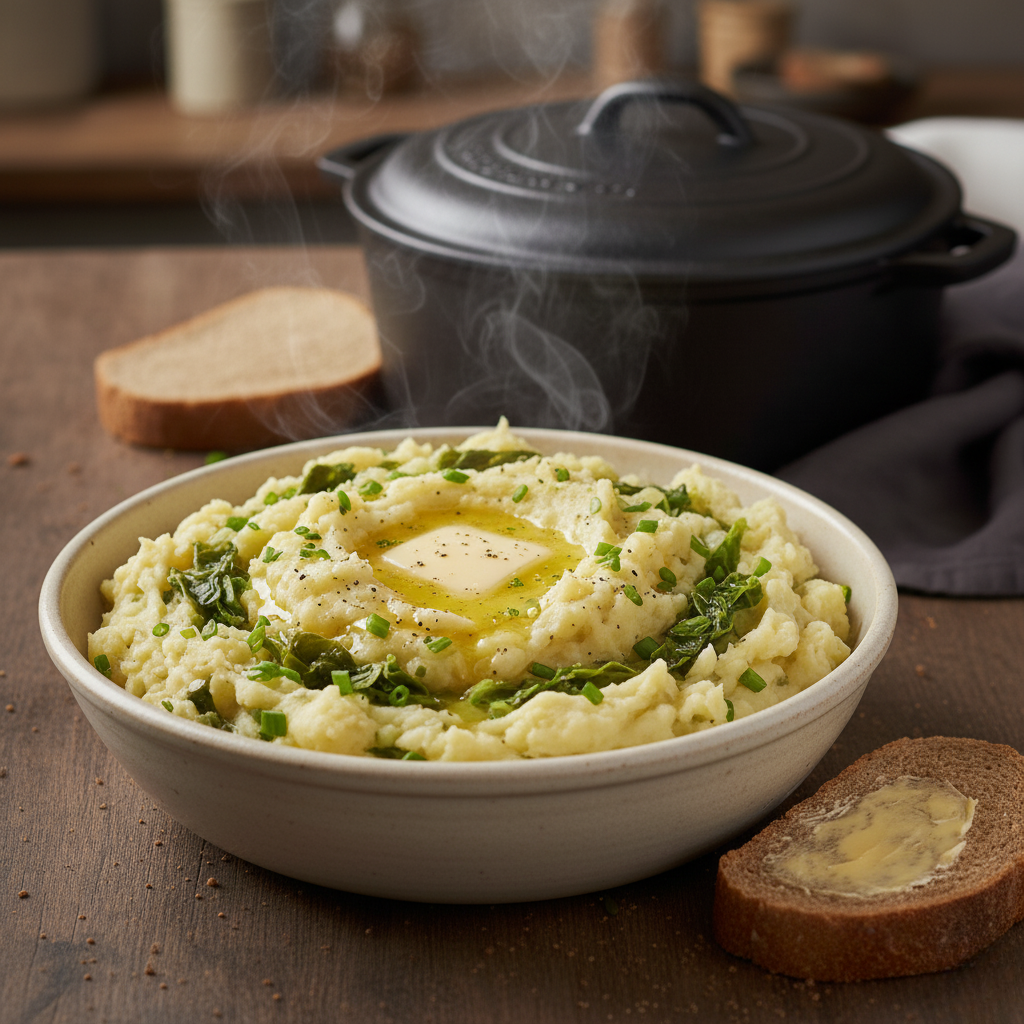
If comfort food had a capital city, it would be in Ireland, and colcannon would be its national dish. This humble combination of creamy mashed potatoes, tender cabbage or kale, and plenty of butter is proof that the simplest ingredients, when treated with respect, can create something truly magical.
My first encounter with colcannon was at a tiny pub in Galway on a bitterly cold October evening. I’d ordered it as a side dish, not expecting much – after all, how exciting could mashed potatoes be? But when that bowl arrived, steaming hot with a golden pool of melted butter in the center, I understood. This wasn’t just mashed potatoes. This was Ireland on a plate.
The beauty of colcannon lies in its simplicity. There are no fancy techniques, no exotic ingredients, no complicated steps. It’s peasant food elevated to an art form through the quality of its components: floury potatoes that mash like clouds, fresh cabbage or kale, sweet spring onions, and good Irish butter. That’s it. That’s the magic.
What is Colcannon?
Colcannon is a traditional Irish dish of mashed potatoes mixed with cabbage or kale, spring onions (scallions), and loads of butter. The name comes from the Irish “cál ceannann,” which roughly translates to “white-headed cabbage.” It’s been a staple in Irish homes for centuries, particularly popular around Halloween when it was traditional to hide charms in the colcannon – finding a ring meant marriage within the year, a coin promised wealth.
The dish is similar to another Irish favorite called “champ,” but champ typically contains only spring onions and no cabbage. Both are delicious, both are quintessentially Irish, and both will become regulars on your dinner table once you try them.
Why You’ll Love This Recipe
Colcannon transforms everyday mashed potatoes into something special. The cabbage adds a lovely texture and slight sweetness, the spring onions bring freshness and bite, and the butter… well, butter makes everything better. It’s creamy, comforting, and somehow manages to feel both indulgent and wholesome at the same time.
This is also one of those brilliant recipes that makes vegetables exciting. Even people who claim they don’t like cabbage fall for colcannon. When it’s cooked properly – tender but not mushy – and mixed with all that creamy potato and butter, it’s irresistible.
Ingredients
- 2 lbs (900g) floury potatoes (Russet, Yukon Gold, or Maris Piper)
- ½ small head of green cabbage (about 1 lb/450g), finely shredded
- 6 spring onions (scallions), white and green parts, thinly sliced
- ½ cup (120ml) whole milk or cream
- 6 tablespoons (85g) butter, divided, plus extra for serving
- Salt and freshly ground black pepper to taste
- Fresh parsley, chopped (optional, for garnish)
Instructions
Step 1: Prepare and Cook the Potatoes (25 minutes)
Peel the potatoes and cut them into evenly-sized chunks (about 2 inches). The more uniform they are, the more evenly they'll cook.
Place the potatoes in a large pot and cover with cold water by about an inch. Add a generous pinch of salt – the water should taste slightly salty, like the sea.
Bring to a boil over high heat, then reduce to a steady simmer. Cook for 15-20 minutes until the potatoes are completely tender when pierced with a fork. They should almost fall apart when you test them – this is what creates that fluffy, cloud-like texture.
Step 2: Cook the Cabbage (10 minutes)
While the potatoes are cooking, bring a medium pot of salted water to a boil. Add the shredded cabbage and cook for 5-7 minutes until tender but still slightly crisp. You don't want it mushy – it should have a bit of bite to it.
Drain the cabbage very well in a colander, pressing out excess water with the back of a spoon. Too much water will make your colcannon soggy, and nobody wants that.
Alternative Method: For deeper flavor, skip the boiling and sauté the cabbage. Melt 2 tablespoons of butter in a large pan over medium heat, add the cabbage, and cook for 8-10 minutes, stirring occasionally, until tender and slightly golden at the edges.
Step 3: Warm the Milk and Spring Onions (5 minutes)
In a small pot or microwave-safe bowl, gently warm the milk with the sliced spring onions and 2 tablespoons of butter. You don't want it boiling – just warm enough that the butter melts and the spring onions soften slightly. This takes about 2-3 minutes on low heat.
Pro Tip: Warming the milk before adding it to the potatoes prevents the mash from going cold and gluey. It's a small step that makes a big difference!
Step 4: Mash the Potatoes (5 minutes)
Drain the cooked potatoes thoroughly and return them to the hot pot. Let them steam for a minute to remove excess moisture – this is the secret to fluffy mash.
Add the remaining 4 tablespoons of butter to the hot potatoes and mash until completely smooth. I prefer a traditional potato masher for rustic texture, but if you want ultra-smooth colcannon, use a potato ricer.
Important: Never use a food processor or electric mixer for mashed potatoes! They'll develop too much gluten and become gluey and unpleasant. Always mash by hand.
Step 5: Combine Everything (3 minutes)
Pour the warm milk and spring onion mixture into the mashed potatoes. Stir gently but thoroughly until creamy and smooth. Start with most of the milk mixture and add more if needed – you want the potatoes creamy but not sloppy.
Add the drained cabbage and fold it gently into the mashed potatoes until evenly distributed. The potato should still be visible – you're creating a beautiful green-and-white marbled effect, not turning everything uniformly green.
Season generously with salt and freshly ground black pepper. Taste and adjust – colcannon needs a good amount of seasoning to really sing.
Step 6: Serve Hot (Immediately!)
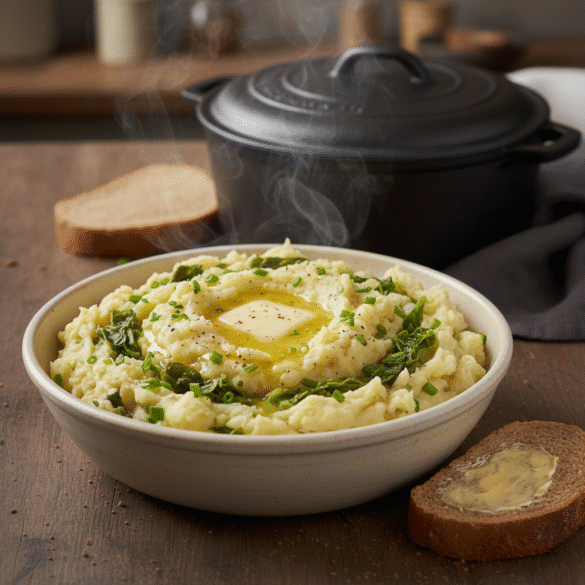
Spoon the colcannon into a warmed serving bowl or individual bowls. Make a well in the center of each serving and add a generous knob of butter to melt into a golden pool in the middle.
The traditional way to eat colcannon is to take a forkful of the potato mixture and dip it into the melted butter with each bite. Don't mix the butter in – the contrast of the creamy potato and the rich, liquid butter is part of the experience.
Garnish with a sprinkle of chopped fresh parsley if you like, though it's not traditional.
Traditional Irish Colcannon: Creamy Mashed Potatoes with Cabbage
If comfort food had a capital city, it would be in Ireland, and colcannon would be its national dish. This humble combination of creamy mashed potatoes, tender cabbage or kale, and plenty of butter is proof that the simplest ingredients, when treated with respect, can create something truly magical.
My first encounter with colcannon was at a tiny pub in Galway on a bitterly cold October evening. I’d ordered it as a side dish, not expecting much – after all, how exciting could mashed potatoes be? But when that bowl arrived, steaming hot with a golden pool of melted butter in the center, I understood. This wasn’t just mashed potatoes. This was Ireland on a plate.
The beauty of colcannon lies in its simplicity. There are no fancy techniques, no exotic ingredients, no complicated steps. It’s peasant food elevated to an art form through the quality of its components: floury potatoes that mash like clouds, fresh cabbage or kale, sweet spring onions, and good Irish butter. That’s it. That’s the magic.
What is Colcannon?
Colcannon is a traditional Irish dish of mashed potatoes mixed with cabbage or kale, spring onions (scallions), and loads of butter. The name comes from the Irish “cál ceannann,” which roughly translates to “white-headed cabbage.” It’s been a staple in Irish homes for centuries, particularly popular around Halloween when it was traditional to hide charms in the colcannon – finding a ring meant marriage within the year, a coin promised wealth.
The dish is similar to another Irish favorite called “champ,” but champ typically contains only spring onions and no cabbage. Both are delicious, both are quintessentially Irish, and both will become regulars on your dinner table once you try them.
Why You’ll Love This Recipe
Colcannon transforms everyday mashed potatoes into something special. The cabbage adds a lovely texture and slight sweetness, the spring onions bring freshness and bite, and the butter… well, butter makes everything better. It’s creamy, comforting, and somehow manages to feel both indulgent and wholesome at the same time.
This is also one of those brilliant recipes that makes vegetables exciting. Even people who claim they don’t like cabbage fall for colcannon. When it’s cooked properly – tender but not mushy – and mixed with all that creamy potato and butter, it’s irresistible.
Traditional Irish Colcannon Recipe
Ingredients:
- 2 lbs (900g) floury potatoes (Russet, Yukon Gold, or Maris Piper)
- ½ small head of green cabbage (about 1 lb/450g), finely shredded
- 6 spring onions (scallions), white and green parts, thinly sliced
- ½ cup (120ml) whole milk or cream
- 6 tablespoons (85g) butter, divided, plus extra for serving
- Salt and freshly ground black pepper to taste
- Fresh parsley, chopped (optional, for garnish)
Optional Additions:
- Pinch of ground mace or nutmeg
- 2 cloves garlic, minced
- ¼ cup (60ml) additional cream for extra richness
Equipment:
- Large pot for boiling potatoes
- Medium pot or large pan for cabbage
- Potato masher or ricer
- Colander
- Sharp knife and cutting board
Instructions:
Step 1: Prepare and Cook the Potatoes (25 minutes)
Peel the potatoes and cut them into evenly-sized chunks (about 2 inches). The more uniform they are, the more evenly they’ll cook.
Place the potatoes in a large pot and cover with cold water by about an inch. Add a generous pinch of salt – the water should taste slightly salty, like the sea.
Bring to a boil over high heat, then reduce to a steady simmer. Cook for 15-20 minutes until the potatoes are completely tender when pierced with a fork. They should almost fall apart when you test them – this is what creates that fluffy, cloud-like texture.
Step 2: Cook the Cabbage (10 minutes)
While the potatoes are cooking, bring a medium pot of salted water to a boil. Add the shredded cabbage and cook for 5-7 minutes until tender but still slightly crisp. You don’t want it mushy – it should have a bit of bite to it.
Drain the cabbage very well in a colander, pressing out excess water with the back of a spoon. Too much water will make your colcannon soggy, and nobody wants that.
Alternative Method: For deeper flavor, skip the boiling and sauté the cabbage. Melt 2 tablespoons of butter in a large pan over medium heat, add the cabbage, and cook for 8-10 minutes, stirring occasionally, until tender and slightly golden at the edges.
Step 3: Warm the Milk and Spring Onions (5 minutes)
In a small pot or microwave-safe bowl, gently warm the milk with the sliced spring onions and 2 tablespoons of butter. You don’t want it boiling – just warm enough that the butter melts and the spring onions soften slightly. This takes about 2-3 minutes on low heat.
Pro Tip: Warming the milk before adding it to the potatoes prevents the mash from going cold and gluey. It’s a small step that makes a big difference!
Step 4: Mash the Potatoes (5 minutes)
Drain the cooked potatoes thoroughly and return them to the hot pot. Let them steam for a minute to remove excess moisture – this is the secret to fluffy mash.
Add the remaining 4 tablespoons of butter to the hot potatoes and mash until completely smooth. I prefer a traditional potato masher for rustic texture, but if you want ultra-smooth colcannon, use a potato ricer.
Important: Never use a food processor or electric mixer for mashed potatoes! They’ll develop too much gluten and become gluey and unpleasant. Always mash by hand.
Step 5: Combine Everything (3 minutes)
Pour the warm milk and spring onion mixture into the mashed potatoes. Stir gently but thoroughly until creamy and smooth. Start with most of the milk mixture and add more if needed – you want the potatoes creamy but not sloppy.
Add the drained cabbage and fold it gently into the mashed potatoes until evenly distributed. The potato should still be visible – you’re creating a beautiful green-and-white marbled effect, not turning everything uniformly green.
Season generously with salt and freshly ground black pepper. Taste and adjust – colcannon needs a good amount of seasoning to really sing.
Step 6: Serve Hot (Immediately!)
Spoon the colcannon into a warmed serving bowl or individual bowls. Make a well in the center of each serving and add a generous knob of butter to melt into a golden pool in the middle.
The traditional way to eat colcannon is to take a forkful of the potato mixture and dip it into the melted butter with each bite. Don’t mix the butter in – the contrast of the creamy potato and the rich, liquid butter is part of the experience.
Garnish with a sprinkle of chopped fresh parsley if you like, though it’s not traditional.
Pro Tips for Perfect Colcannon
Choose the Right Potatoes: Floury potatoes (high starch content) are essential. Russet, Yukon Gold, or Maris Piper varieties work best. Waxy potatoes will give you gummy, gluey mash – avoid them!
Don’t Overcook the Cabbage: You want it tender but still with a bit of texture. Overcooked cabbage becomes mushy and releases an unpleasant sulfur smell.
Use Real Butter: This isn’t the place for margarine or oil. Irish butter (like Kerrygold) is ideal if you can find it – the high fat content makes all the difference.
Warm Your Serving Bowl: Run hot water in your serving bowl before you fill it with colcannon. The dish cools quickly, and a warm bowl helps keep it hot longer.
Fresh Spring Onions are Key: The mild onion flavor is crucial. Regular onions are too strong and will overpower the delicate potato and cabbage flavors.
Season Generously: Potatoes need more salt than you think. Always taste and adjust before serving.
Variations to Try
Colcannon with Kale: Replace the cabbage with chopped kale for a slightly earthier, more robust flavor. Remove the tough stems and chop the leaves finely.
Leek Colcannon: Substitute leeks for spring onions. Slice them thinly and sauté in butter until very soft before adding to the milk.
Bacon Colcannon: Fry 4-6 strips of bacon until crispy, crumble them, and fold into the finished colcannon. Reserve some for garnish on top.
Garlic Colcannon: Add 2-3 cloves of minced garlic to the milk when warming it for a modern twist.
Cheesy Colcannon: Stir in ½ cup of grated sharp cheddar or Irish cheddar for extra richness (not traditional, but delicious!).
Herb Colcannon: Add fresh chopped herbs like chives, parsley, or thyme along with the spring onions.
Serving Suggestions
As a Side Dish:
- With Irish Beef and Guinness Stew (the perfect pairing!)
- Alongside roasted lamb or beef
- With pan-fried pork chops
- Next to baked ham
- With grilled sausages (bangers)
As a Main Course:
- Top with a fried egg for a simple, satisfying meal
- Serve with grilled mushrooms and tomatoes for a vegetarian dinner
- Add crispy bacon bits throughout and serve with crusty bread
Traditional Irish Meal: Serve colcannon with boiled bacon (ham) and a parsley sauce for a classic Irish dinner that’s been enjoyed for generations.
Storage and Reheating
Refrigerator: Store leftover colcannon in an airtight container for up to 3 days. The texture may become slightly denser as it cools, but it’s still delicious.
Reheating:
- Stovetop: Add a splash of milk or cream to a pot, add the colcannon, and warm gently over low heat, stirring frequently.
- Microwave: Add a tablespoon of milk, cover loosely, and microwave in 30-second intervals, stirring between each, until heated through.
- Oven: Spread in a buttered baking dish, dot with extra butter, and warm at 350°F (175°C) for 15-20 minutes.
Freezing: While you can freeze colcannon for up to 2 months, the texture may become slightly grainy when thawed. If freezing, undercook the potatoes slightly and use less milk initially. Thaw overnight in the refrigerator before reheating.
Make-Ahead Tip: You can prepare colcannon a few hours in advance. Keep it covered in a warm oven (200°F/95°C) until ready to serve. Add a little extra milk when reheating if needed.
Leftover Magic
Don’t toss leftover colcannon! It’s perfect for:
Colcannon Cakes: Form into patties, dust with flour, and pan-fry in butter until golden and crispy on both sides. Serve with fried eggs for breakfast.
Shepherd’s Pie Topping: Use as the potato topping for shepherd’s pie or cottage pie instead of plain mashed potatoes.
Potato Soup: Thin with stock and milk to create a creamy potato and cabbage soup.
Stuffed Peppers: Mix with cooked sausage and use to stuff bell peppers, then bake.
The History and Tradition
Colcannon has been a part of Irish cuisine for centuries, with the first written mentions dating back to the 1700s. It was traditionally associated with Halloween (Samhain), when it was served with various charms hidden inside – a ring for marriage, a coin for wealth, a thimble for spinsterhood, or a button for bachelorhood.
On Halloween night, it was customary to serve colcannon with a well of butter in the center. Young unmarried women would put the first spoonful on the doorstep for the fairies, hoping to dream of their future husband that night.
The dish became particularly popular because it used ingredients that were readily available even to poor families – potatoes, cabbage, and milk could be grown or produced on even the smallest plot of land. It was filling, nutritious, and could feed a large family economically.
Today, while we’ve (mostly) left behind the fortune-telling charms, colcannon remains a beloved comfort food served at both everyday dinners and special occasions. It’s particularly popular on St. Patrick’s Day and remains a staple side dish in Irish homes and restaurants worldwide.
Why This Simple Recipe Shines
In a world of complicated recipes and exotic ingredients, colcannon stands as a testament to the power of simplicity. There’s no hiding behind fancy sauces or elaborate techniques – it’s just good ingredients, treated well.
The creamy potatoes provide a perfect canvas for the slightly sweet cabbage and the sharp bite of spring onions. Each component enhances the others without overpowering them. And that pool of melting butter in the center? That’s not just tradition – it’s genius. The rich, golden butter adds a luxurious finish to each bite.
This is the kind of food that makes you slow down and savor. It’s warming, satisfying, and somehow both humble and special at the same time. It’s the food of home, of family gatherings, of cold evenings by the fire.
Whether you’re exploring Irish cuisine, looking for the perfect side dish for your Sunday roast, or simply want to elevate your mashed potato game, colcannon delivers. It’s easy enough for a weeknight, special enough for guests, and delicious enough that you’ll wonder how you ever lived without it.
So grab some potatoes, a cabbage, and good butter, and let’s make some Irish magic together. Sláinte!