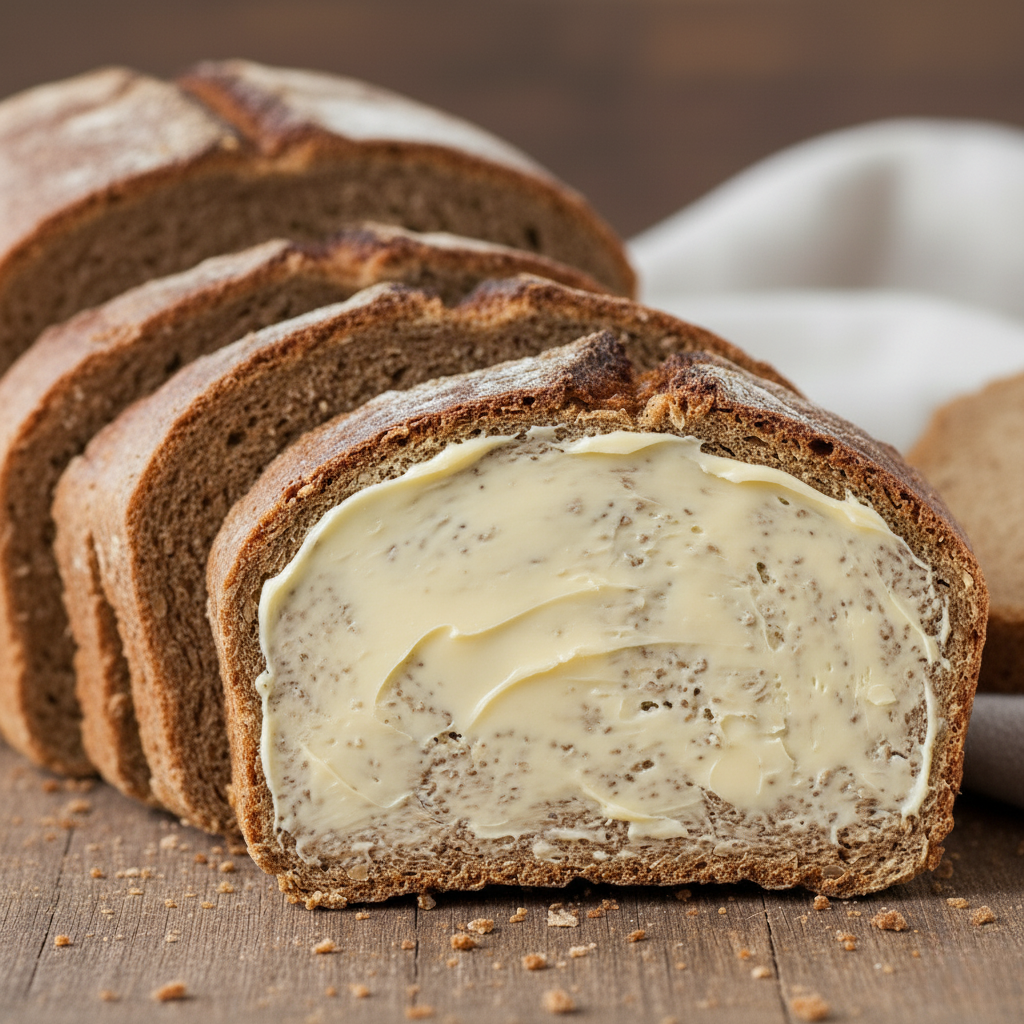
The earthy aroma of freshly baked brown bread filling a cozy Irish kitchen is one of life’s simplest pleasures. This traditional Irish brown bread recipe has sustained families for generations, and today I’m sharing the authentic method that will make your house smell like a proper Irish home.
There’s something deeply satisfying about pulling a golden-crusted loaf of Irish brown bread from the oven. Unlike its cousin, the white soda bread, brown bread has a heartier, nuttier flavor that comes from wholemeal flour. My grandmother used to say that brown bread was “the bread of life” – substantial enough to fuel a long day’s work, yet simple enough to make every single day.
In Ireland, you’ll find brown bread on every table, from humble farmhouses to fancy hotels. It’s slathered with butter at breakfast, served alongside hearty stews for dinner, and used to mop up the last traces of seafood chowder. Some families eat it with smoked salmon and cream cheese, others prefer it toasted with marmalade. However you serve it, one thing’s certain – once you taste homemade Irish brown bread, the store-bought version will never satisfy you again.
What Makes Irish Brown Bread Special?
Irish brown bread is a quick bread that uses baking soda instead of yeast, which means you can have fresh bread on the table in under an hour. The wholemeal flour gives it a dense, moist crumb and a slightly nutty flavor that’s absolutely addictive. Some recipes add treacle (molasses) for a touch of sweetness and a darker color, while others keep it pure and simple.
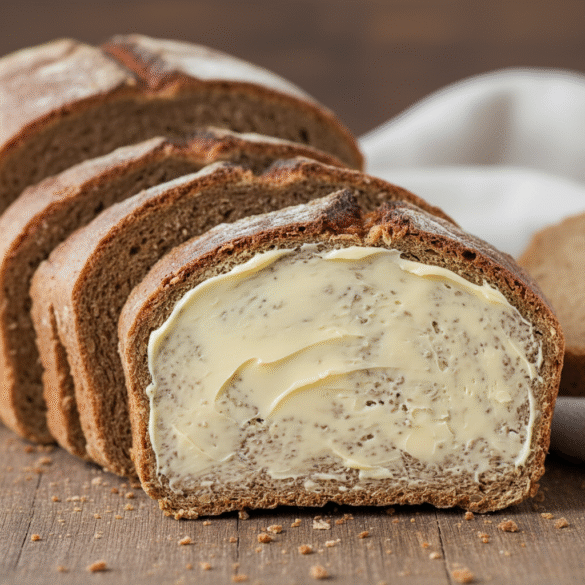
The texture is what sets it apart – it’s substantial without being heavy, crumbly yet moist. When you slice into a warm loaf and spread on some good Irish butter, you’ll understand why this bread has been a staple in Irish homes for centuries.
The Story Behind Brown Bread
Brown bread emerged from necessity during times when white flour was expensive and wholemeal was more affordable. Irish families discovered that by using buttermilk and baking soda – ingredients they had on hand from butter-making – they could create a delicious, nutritious bread without needing yeast or lengthy rising times.
Today, brown bread is enjoying a renaissance as people rediscover the wholesome goodness of whole grains. It’s rich in fiber, has a lower glycemic index than white bread, and keeps you feeling full longer. But honestly, health benefits aside, we eat it because it tastes incredible.
Ingredients
- 3 cups (360g) wholemeal flour (also called whole wheat flour)
- 1 cup (120g) all-purpose white flour
- 2 teaspoons baking soda
- 1 teaspoon salt
- 2 tablespoons dark brown sugar (optional, for slightly sweet version)
- 2 tablespoons wheat bran or oats (optional, adds texture)
- 2 cups (480ml) buttermilk
- 1 tablespoon treacle or molasses (optional, for darker color and deeper flavor)
- 1 tablespoon honey (optional)
Instructions
Step 1: Preheat and Prepare (5 minutes)
Preheat your oven to 425°F (220°C). Line your loaf tin with parchment paper or grease it generously with butter. If using a round tin, you can also bake this free-form on a baking sheet – that's the traditional way.
Step 2: Mix the Dry Ingredients (2 minutes)
In a large mixing bowl, combine the wholemeal flour, white flour, baking soda, and salt. If using brown sugar and bran/oats, add them now. Use your hands to mix everything together thoroughly, making sure the baking soda is evenly distributed throughout the flour. This is important – any lumps of baking soda will create bitter pockets in your bread.
Step 3: Prepare the Buttermilk (1 minute)
Pour the buttermilk into a measuring jug. If using treacle or molasses, warm it slightly in the microwave (about 10 seconds) to make it easier to pour, then stir it into the buttermilk along with the honey if using. The mixture will look a bit odd – that's perfectly normal!
Step 4: Combine Wet and Dry (3 minutes)
Make a well in the center of your dry ingredients and pour in about three-quarters of the buttermilk mixture. Using a wooden spoon or your hand, stir from the center outward, gradually incorporating the flour. Add more buttermilk as needed – you want a thick, sticky dough that's too wet to knead but not so wet it's pourable.
The key here is not to overmix. Unlike yeast breads, you don't want to develop gluten. Mix just until the ingredients come together and you can't see any dry flour. A few lumps are fine – rustic is the goal here!
Step 5: Shape the Dough (2 minutes)
Turn the dough into your prepared tin and gently smooth the top with wet hands or a spatula. If you're feeling traditional, score a deep cross on top with a sharp knife – this isn't just decorative, it helps the bread bake evenly and makes it easier to break into quarters later.
For a beautiful golden crust, brush the top with a little buttermilk or milk. Some people sprinkle a handful of oats on top for extra texture and visual appeal.
Step 6: Bake to Perfection (40-50 minutes)
Place the tin in the center of your preheated oven and bake for 40-50 minutes. The bread is done when it sounds hollow when tapped on the bottom and has a lovely golden-brown crust. If you have a kitchen thermometer, the internal temperature should reach 200°F (93°C).
Important: After 30 minutes, check the bread. If the top is browning too quickly, cover it loosely with aluminum foil for the remaining baking time.
Step 7: Cool and Serve (15 minutes minimum)
This is the hardest part – waiting! Remove the bread from the oven and turn it out onto a wire rack. Let it cool for at least 15 minutes before slicing. If you cut it too soon, it will be gummy inside.
That said, warm brown bread with melting butter is one of life's great pleasures, so I won't judge if you can't wait the full cooling time!